
At the end of last year, I wrote about the importance of using basic, fundamental metrics like ARR when evaluating and understanding your business. Last week, the Economist referred to ARR as a “famously vague Silicon Valley metric”. I felt like I was being called out by name.
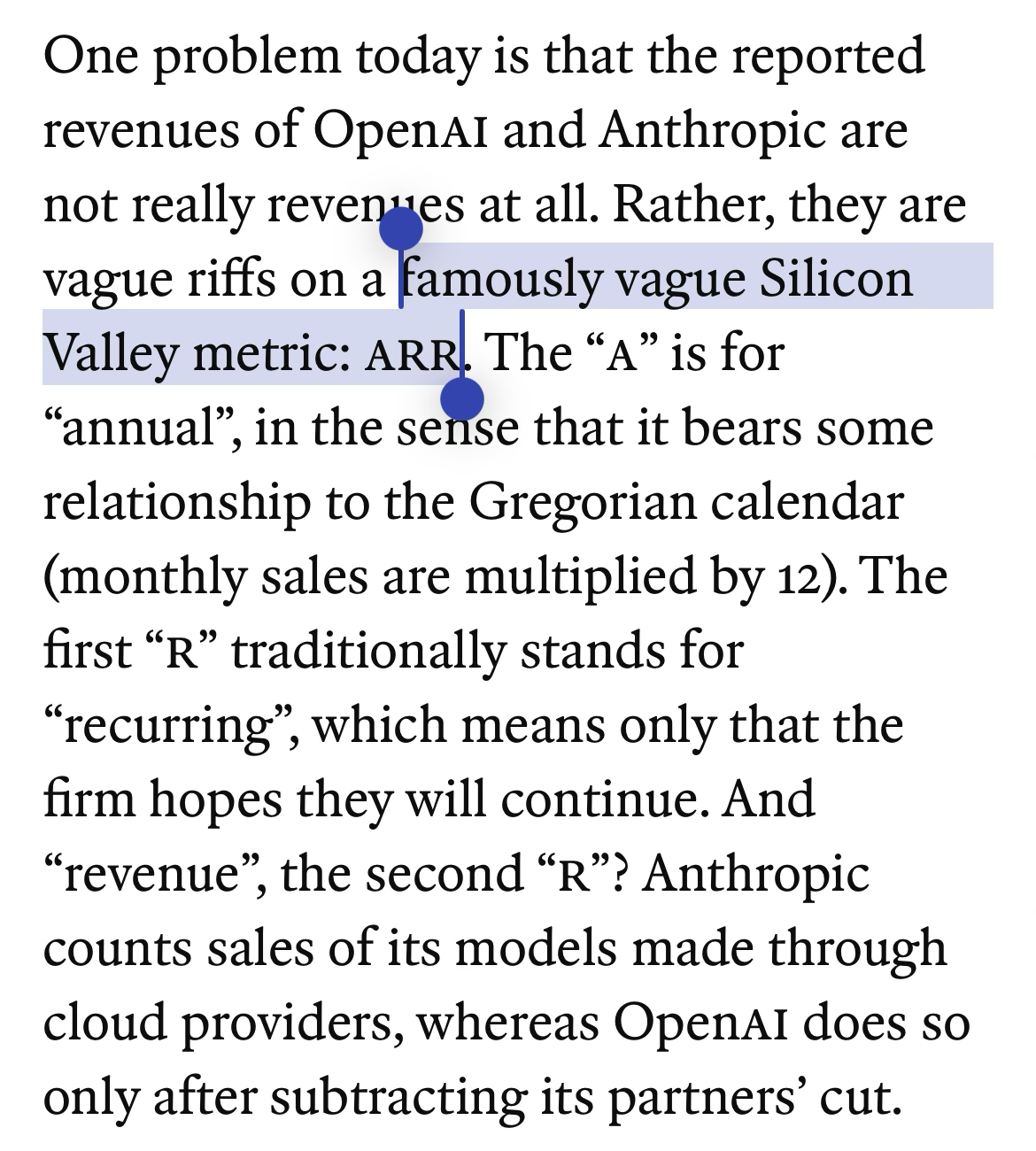
The Economist pointed to examples where metrics that seem like they have obvious, clear meanings are actually fuzzy and frequently abused. To me, the lesson I might add to my earlier writing is that just having a metric is not enough: you have to be honest about what the metric means and what it does and does not capture. It’s obviously bad to game the metrics for the sake of showing investors, but it’s even worse if you convince yourself you are using the right metric when you aren’t.
I still stand by ARR as a good metric for early- and growth-stage startups, but only if it makes sense. ARR should refer to the value of annual contracts that customers have signed, and should represent money you reasonably expect to continue. It doesn’t make sense if that’s not the case:
- If most customers are paying month-to-month ARR probably isn’t a fit. Just report revenue.
- If it’s unclear when and how you include certain things in revenue, err on the conservative side. eg If your product is sold in a marketplace that takes a 15% cut, count the money you took in, not the money a customer paid.
Of course, if you are very early stage, sometimes it can be valuable to just measure the easiest thing to measure – just be sure you understand the limitations of your chosen metrics.